De mobilization and Generative AI
The Dutch mobilization began 85 years ago, and since then, there have been significant technological advancements. One of the most recent developments is generative AI, a form of artificial intelligence capable of creating texts, images, and even videos. Several generative AI programs exist, with ChatGPT being the most well-known.
With generative AI, you provide a task, also called a prompt, and the AI program executes it. The AI program draws its information from various datasets, such as websites, and uses this data to complete the task as effectively as possible. However, this does not mean that generative AI is flawless. It can generate inaccurate or even incorrect information. Therefore, it’s important to critically evaluate the results.
In this monthly article, we delve into how generative AI portrays the Dutch mobilization. To do so, three different tasks were assigned to three different AI programs.
- Create a historical depiction of the Dutch mobilization during 1939–1940.
- Create a historical depiction of the Dutch army during the May days of 1940.
- Create a historical depiction of the Dutch army during the surrender/demobilization of 1940.
The outcomes and remarks about these results are discussed below.
ChatGPT
ChatGPT is one of the most popular AI programs currently in use. Developed by OpenAI, the program can generate various types of content, such as texts, videos, and images.
What stands out in the first generated image is the accurate depiction of the Dutch landscape, featuring recognizable elements such as windmills, houses, and flat terrain. These elements are characteristic of both historical and contemporary Netherlands. Another interesting detail is that the depicted mobilized soldiers are using bicycles. This is historically accurate, as two cyclist regiments were part of the Dutch army during the mobilization period. However, the military uniforms are not historically accurate. They closely resemble American military uniforms. This issue also appears in the second image, where both the uniforms and weapons depict an American style. The weapons in the second image resemble the American infantry rifles M1 Garand or M1 Carbine, whereas the Dutch army at the time used the Mannlicher M95. Nonetheless, other details are more accurately depicted. For instance, the puttees and shoes correspond to what Dutch soldiers wore during the mobilization period.
In the final image, the landscape is similar to that of the first image. However, the depicted weapons closely resemble the German infantry rifle the Mauser Gewehr 98, while the uniforms appear to be a mix of German and American styles. All in all, the images are interesting and contain several recognizable elements, but they are not entirely historically accurate.
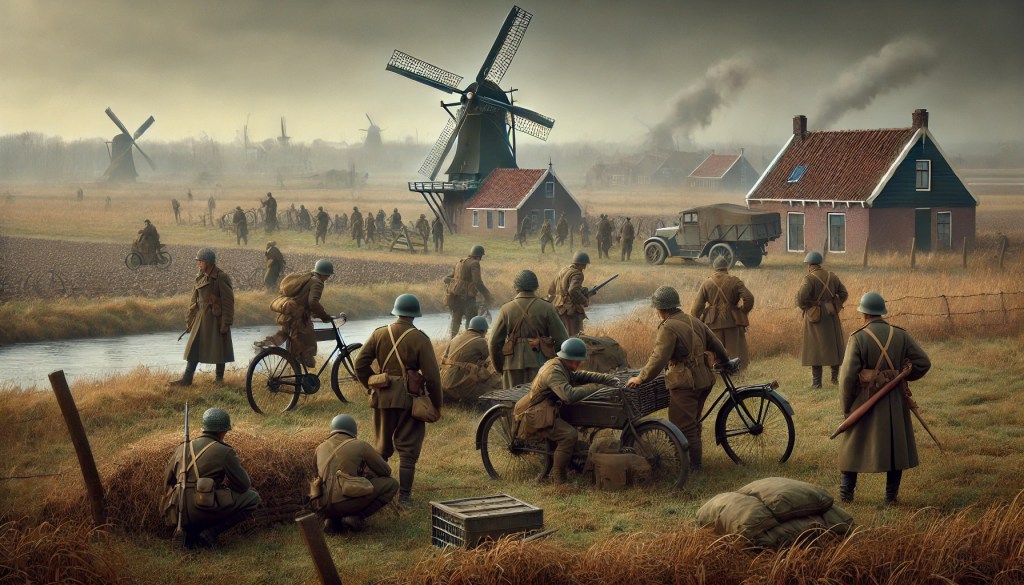
Create a historical depiction of the Dutch mobilization during 1939–1940.
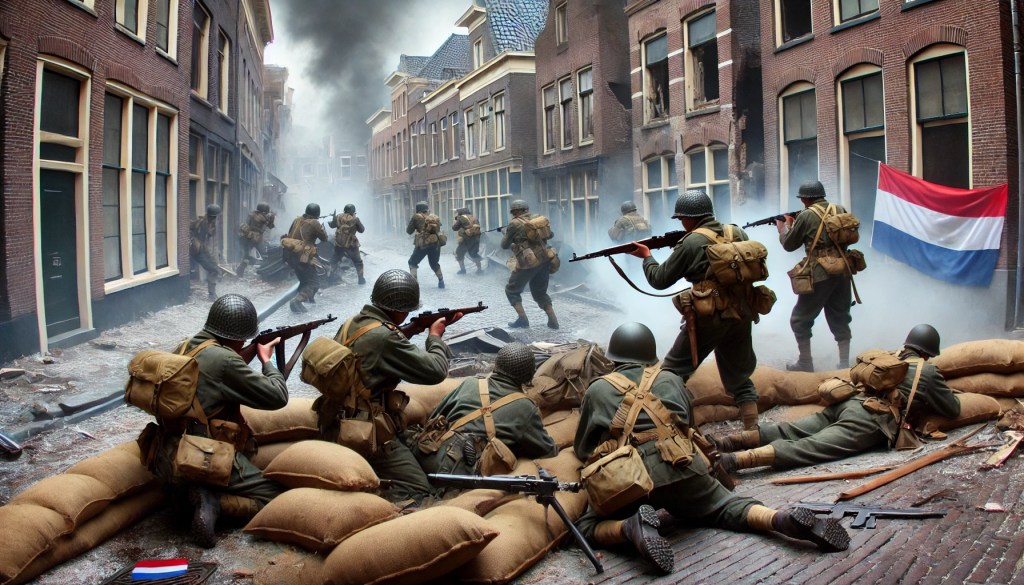
Create a historical depiction of the Dutch army during the May days of 1940.
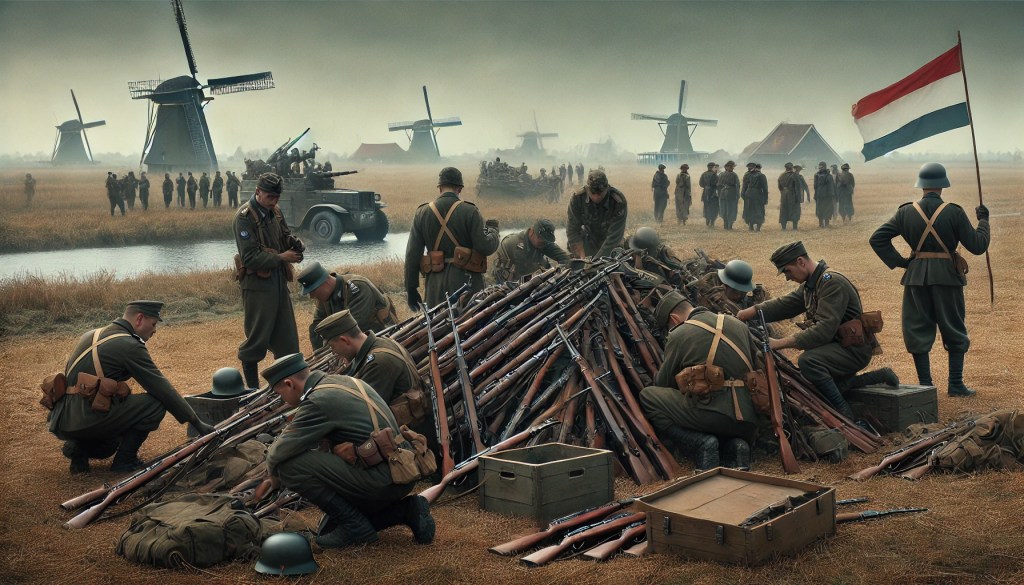
Create a historical depiction of the Dutch army during the surrender/demobilization of 1940.
Microsoft Copilot
The second program is a generative AI from Microsoft called Microsoft Copilot. I asked Microsoft Copilot to execute all three tasks. However, only the first task was actually completed. For the other two tasks, Microsoft Copilot indicated that they could not be performed as they violated content guidelines.
Nevertheless, the result of the first task was impressive: the image depicts a Dutch city with a large number of soldiers lined up in rows. However, the image is not entirely historically accurate, as the uniforms bear little resemblance to the military uniforms of Dutch soldiers from the 1939–1940 period.
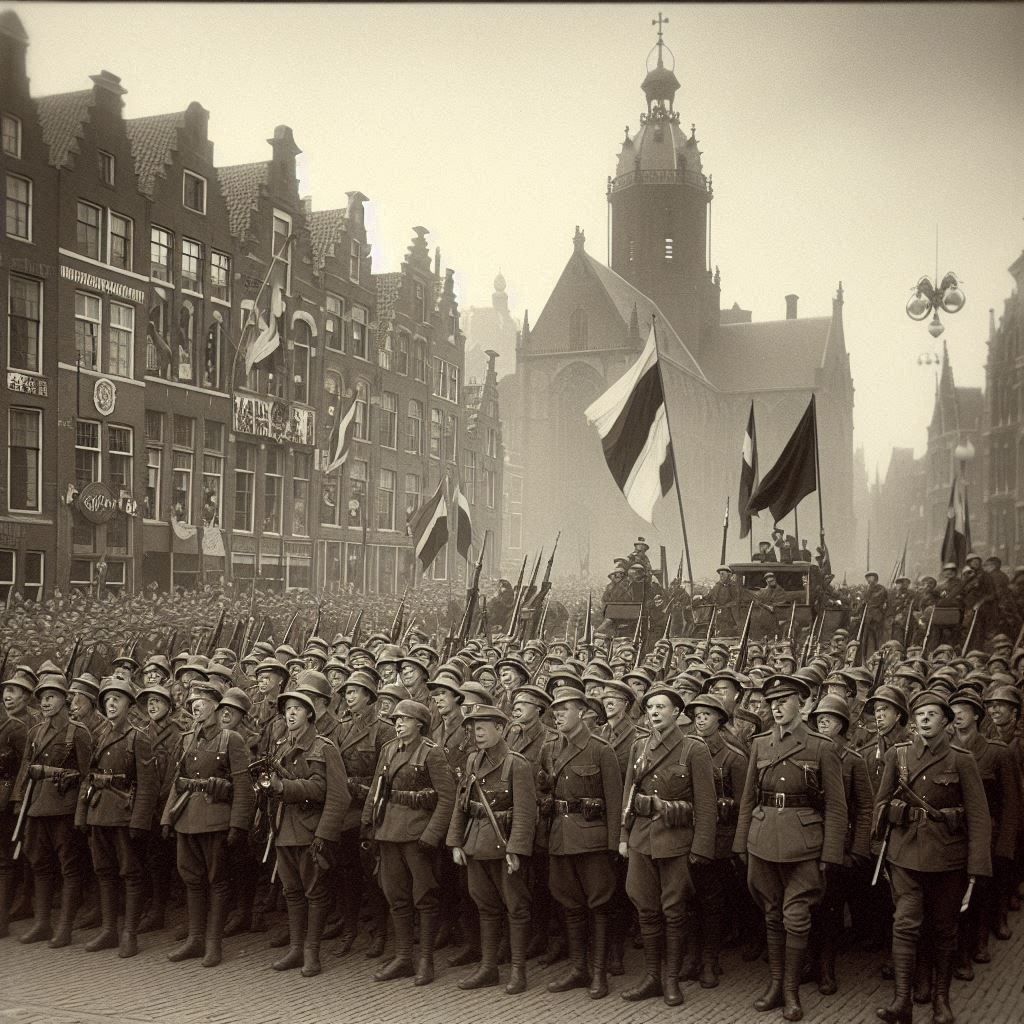
Create a historical depiction of the Dutch mobilization during 1939–1940.
Canva
The third program is Canva. Canva is a website that allows you to create and use graphic designs for posters, documents, presentations, and social media posts. While Canva itself is not a generative AI, the platform does offer the option to generate images for your graphic designs.
The first generated image is impressive and shows a group of soldiers in a street. Compared to ChatGPT’s designs, these appear to be somewhat more historically accurate, although some discrepancies are still visible. The second image features more details of Dutch houses. However, it remains difficult to confirm with certainty that these are Dutch soldiers, as the uniforms still show deviations. The third and final image comes closest to resembling a Dutch uniform from 1939-1940, with the only difference being the helmet. This helmet seems to resemble the Danish M1923 helmet used by Danish soldiers during World War II.
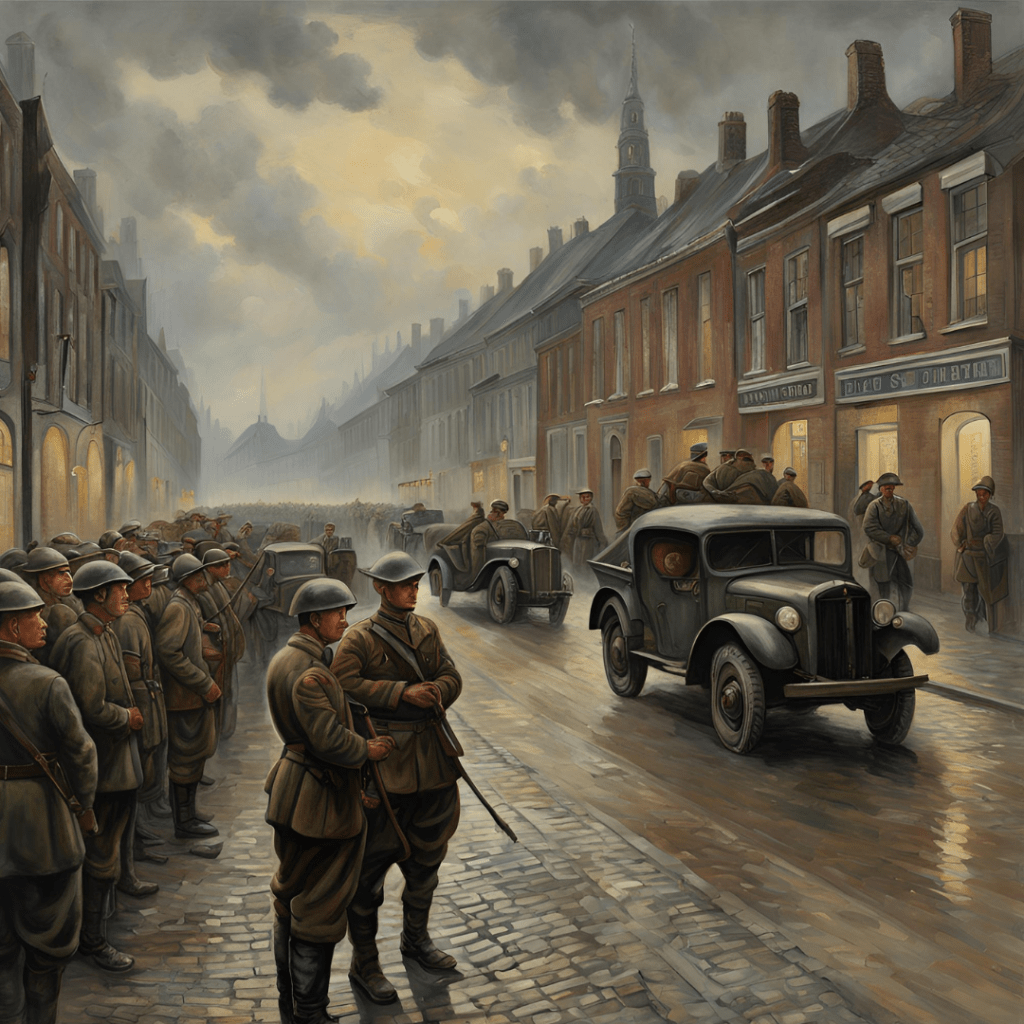
Create a historical depiction of the Dutch mobilization during 1939–1940.
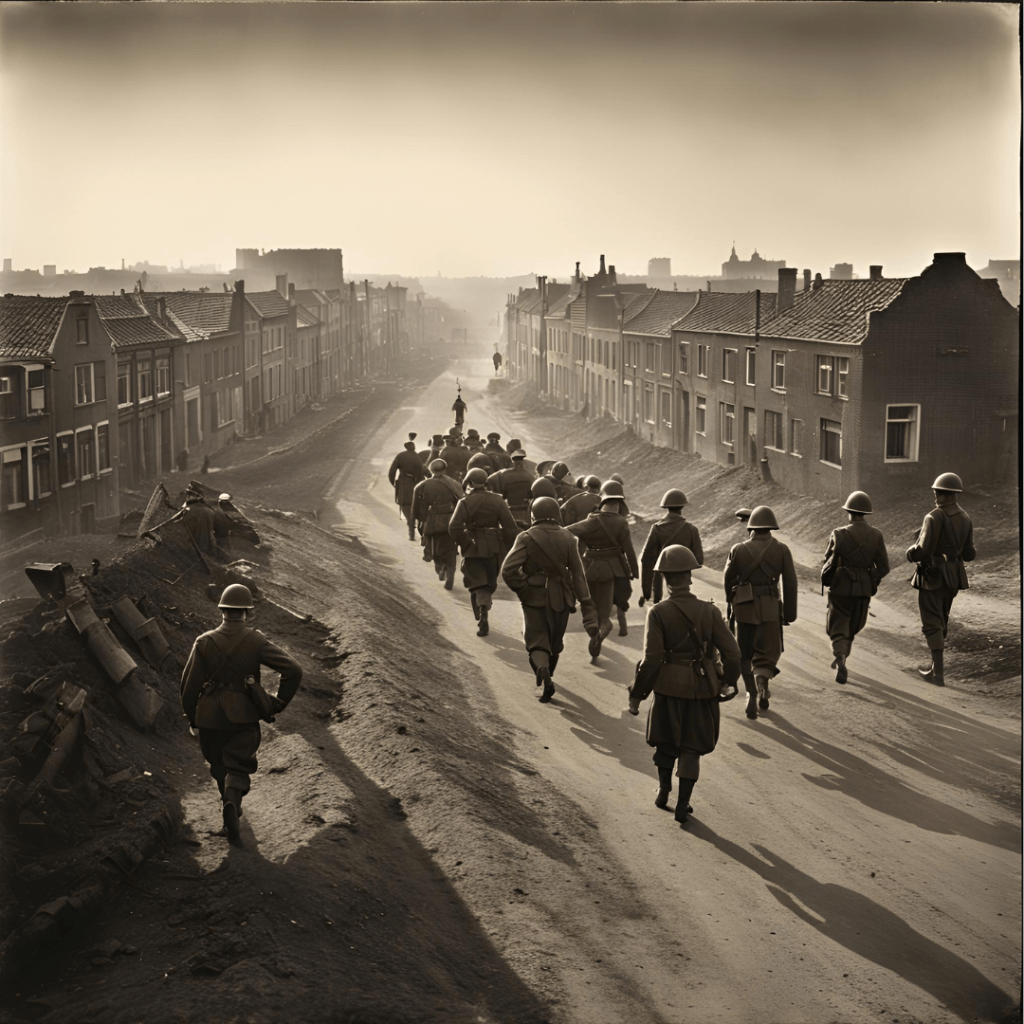
Create a historical depiction of the Dutch army during the May days of 1940.

Create a historical depiction of the Dutch army during the surrender/demobilization of 1940.
Conclusion
Although generative AI still has a long way to go to accurately depict the Dutch mobilization of 1939-1940, there are certainly elements that correspond to the mobilization of 1939-1940.
 Soldaat Sikke Hiemstra